
 Sort By
 Top Rated Seller



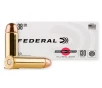

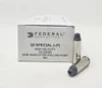
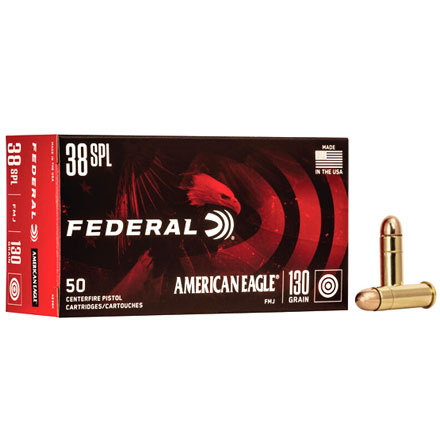

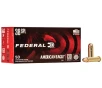

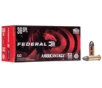
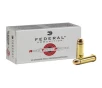

Which Bullet Type You Should Buy?
.38 Special ammunition comes in several bullet designs, and each type can make sense for a different shooting purpose.
| Bullet Type | When To Consider This Type |
| FMJ | Consider FMJ when you want economical ammunition for regular range practice or training. |
| TMJ | Consider TMJ when you want a training-oriented load with a more completely enclosed projectile. |
| LRN | Consider LRN when you prefer a traditional .38 Special load or are looking for a classic lead-bullet configuration. |
| JHP | Consider JHP ammunition when you are specifically looking for a factory load with an expanding-bullet design and your firearm is compatible with that ammunition. |
| Wadcutter | Consider wadcutters when your primary focus is target shooting and paper-target practice. |
| Semi-Wadcutter | Consider semi-wadcutters when you want an alternative to traditional round-nose or full-wadcutter designs. |
Which Bullet Weight You Should Buy?
| Bullet Weight | When To Consider This Type |
| 110 Grain | Consider 110gr when you want to compare lighter-bullet loads and their published velocity and recoil characteristics. |
| 125 Grain | Consider 125gr when you want a widely available bullet weight with several projectile designs to compare. |
| 130 Grain | Consider 130gr when comparing commonly available .38 Special ammunition for regular range use and general shooting. |
| 135 Grain | Consider 135gr when a particular load or bullet design is offered in this weight and its specifications meet your requirements. |
| 148 Grain | Consider 148gr when you are specifically comparing wadcutter ammunition for target shooting and paper-range practice. |
| 158 Grain | Consider 158gr when you want to compare traditional .38 Special loads or different bullet designs available at this weight. |
Comparison With Related Calibers
38 Special vs. 357 Magnum
.38 Special and .357 Magnum are closely related cartridges, but they are not interchangeable in both directions.
A firearm chambered specifically for .38 Special should not be loaded with .357 Magnum ammunition.
Many .357 Magnum revolvers, on the other hand, are designed to accept .38 Special ammunition. The .357 Magnum case is longer than the .38 Special case, which prevents .357 Magnum ammunition from being chambered in firearms designed only for .38 Special.
If you own a .357 Magnum firearm and want to use .38 Special ammunition, always verify compatibility in the manufacturer's documentation. Check detailed comparison here.
Is a .38 Special stronger than a 9mm?
Generally, no. For modern defensive and general-purpose handgun ammunition, 9mm caliber typically offers higher velocity, greater muzzle energy, higher capacity, and a broader selection of modern loads.
.38 Special remains a well-established cartridge, particularly in revolvers, and can still offer effective performance with appropriate ammunition.

